What is an Escape Room? Complete Guide
Last updated: April 2026
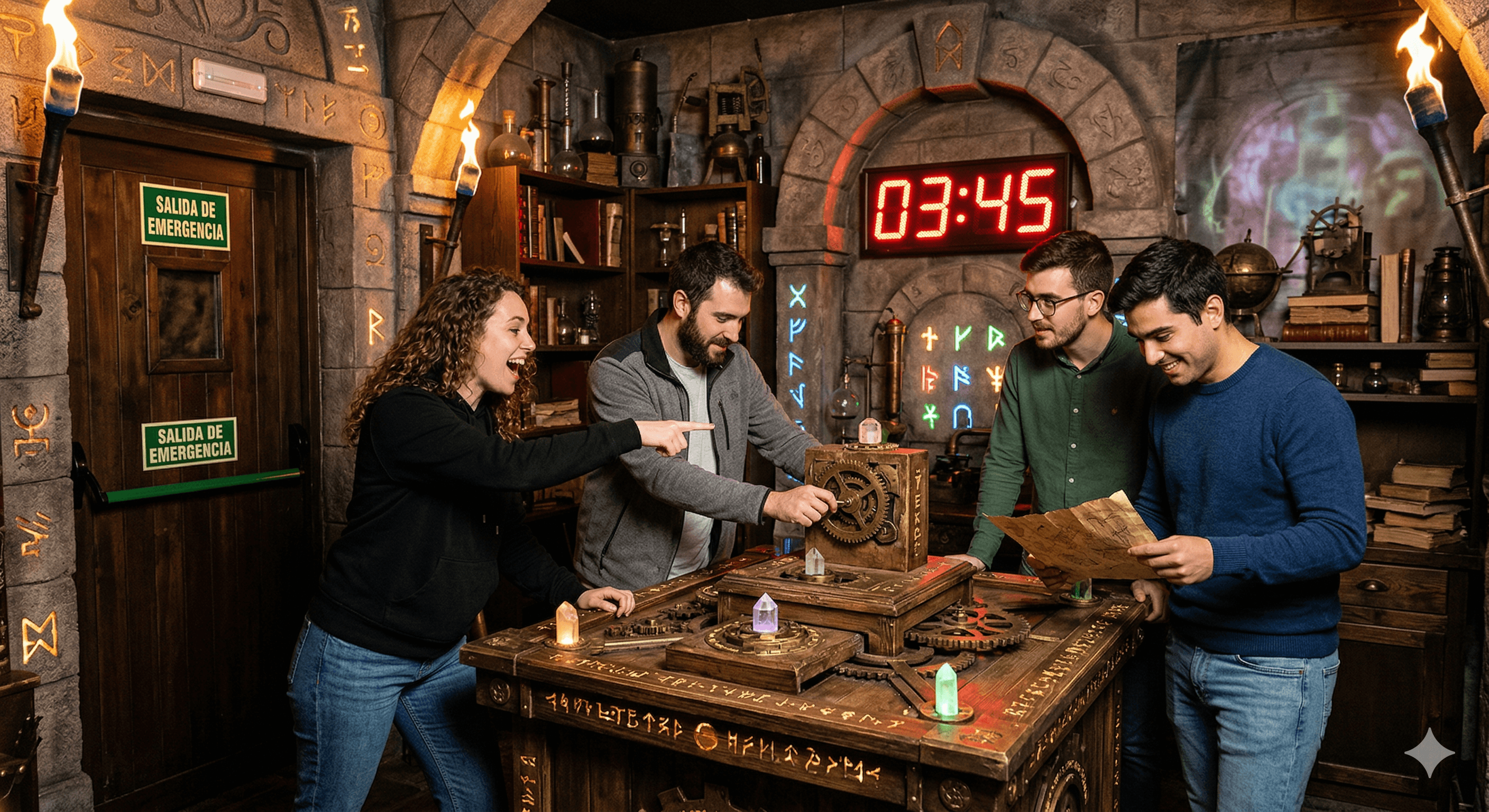
Imagine being locked in a room with your friends, partner or work colleagues. The door closes. You have a limited time to solve a series of puzzles, discover hidden clues and complete a mission before the clock hits zero. Nobody is going to help you (well, a little bit, yes). No Google. No ChatGPT. Just your ingenuity, your communication skills, and with luck, the ability to keep your nerve when there are three minutes left.
That, in essence, is an escape room. But if you stop at that definition you are missing 90% of the picture. Because what started a few years ago as "a room with padlocks" has become an immersive entertainment industry that rivals cinema, theme parks and, for many, any other form of leisure you have ever tried.
In this guide we tell you everything you need to know before diving into your first experience (or your next one, if you are already a self-confessed addict). Exactly what an escape room is, how it works, what types exist, what to expect when you arrive and, of course, some tips so you don't embarrass yourself. Well, so you embarrass yourself just the right amount.
What exactly is an escape room?
An escape room (also called escape game or puzzle room) is a leisure experience in which a group of people enters a themed space and must solve a series of interconnected tests, puzzles and riddles to complete a mission within a set time.
The concept was born in Japan in the late 2000s and spread around the world like wildfire. What started as simple rooms with combination padlocks and hidden keys has evolved into cinematic experiences with live actors, special effects, advanced technology and sets that would make more than one Hollywood art director blush.
The key to an escape room is not just solving puzzles. It is the complete experience: the story that envelops you, the tension of the clock, the euphoria of finding a clue, the shouts of "come here, I found something!" and, of course, that feeling of triumph (or dignified defeat) when it all ends.
And no, you won't really be locked in. You can always leave if you need to. Although your pride may not come out unscathed.
How does an escape room work? Step by step
If you have never played an escape room, it is normal to have a thousand questions. Will I be locked in? Do I need to be a genius? Can I go to the bathroom? Don't worry, let's take it step by step.
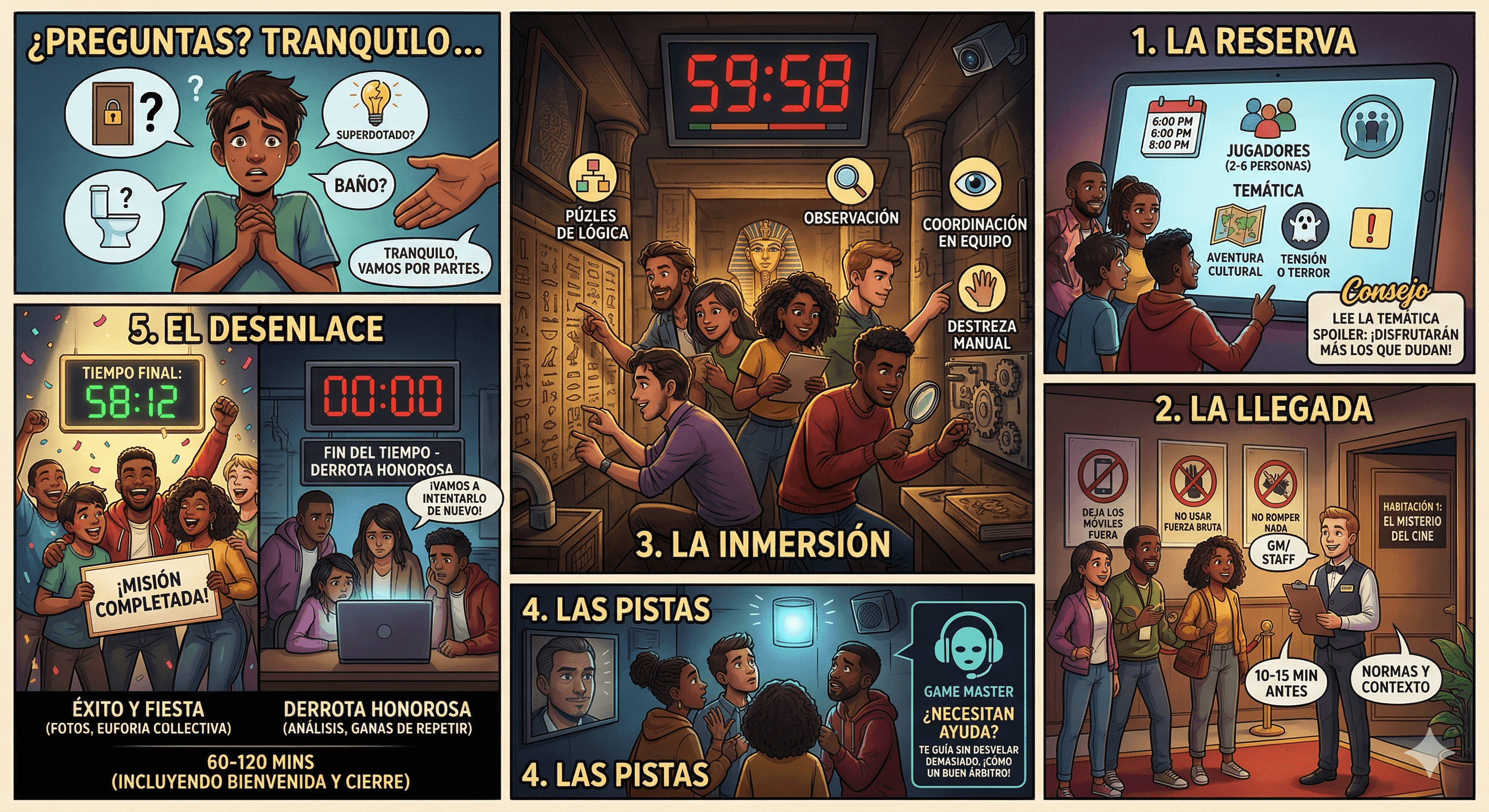
The booking. You choose a room, a time slot and the number of players. Most rooms accept between 2 and 6 people, although some experiences are designed for larger groups. Tip: read the theme before booking — some include tension or horror elements and not everyone wants that (spoiler: those who say they don't usually enjoy it the most).
Arrival. Arrive 10-15 minutes early. The venue team will greet you, explain the basic rules (don't break anything, no brute force, phones away) and brief you on the room's story.
Immersion. This is where the magic begins. You enter the room and the clock starts. From that moment on, everything you see, touch and hear could be a clue. Puzzles range from logic to observation, manual dexterity, and teamwork — every room is its own world.
Hints. If you get stuck (it will happen, it happens to everyone), the Game Master will lend a hand. This is the person monitoring your game and guiding you without giving too much away. A good Game Master is like a good referee: you don't notice them when they are doing their job, but they make all the difference.
The finale. You complete the mission in time (celebrations, photos, collective euphoria) or time runs out (honourable defeat, a debrief on what went wrong and an immediate urge to try again). Either way, the experience usually lasts between 60 and 120 minutes including the welcome and closing.
Types of escape rooms: not all are the same (and that's a good thing)
Saying "escape room" in 2026 is like saying "restaurant". Yes, they all serve food, but between a beach shack and a three-Michelin-star restaurant there is a universe. It is exactly the same with escape rooms. Here are the main types you will encounter:
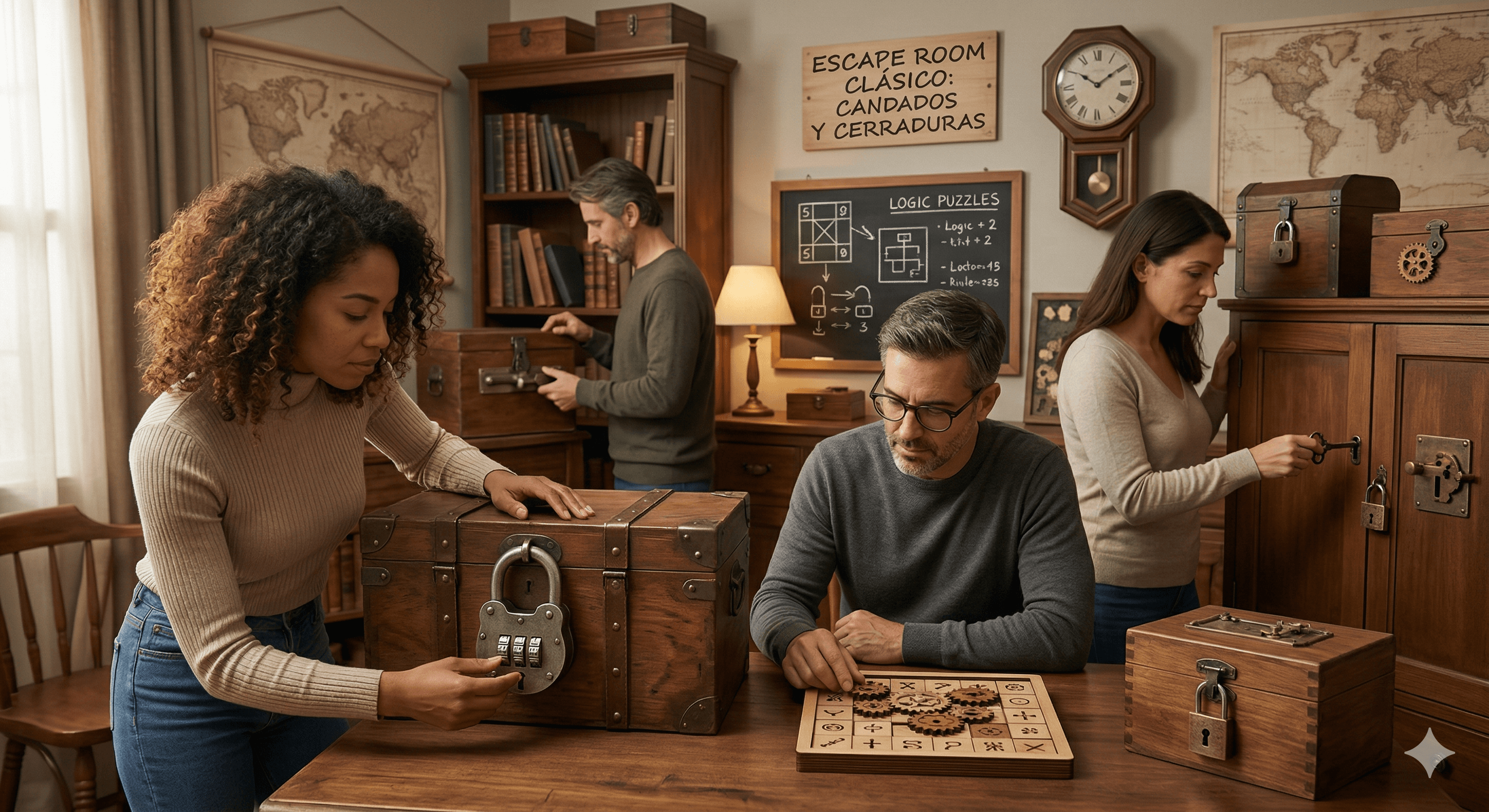
Classic escape rooms (padlocks and keys)
The original format. Rooms with logic puzzles, combination padlocks, hidden keys, and manual mechanisms. Perfect for beginners because the mechanics are intuitive and the immersion level is manageable. Ideal if you want something cerebral without too many surprises.
Immersive escape rooms (the full experience)
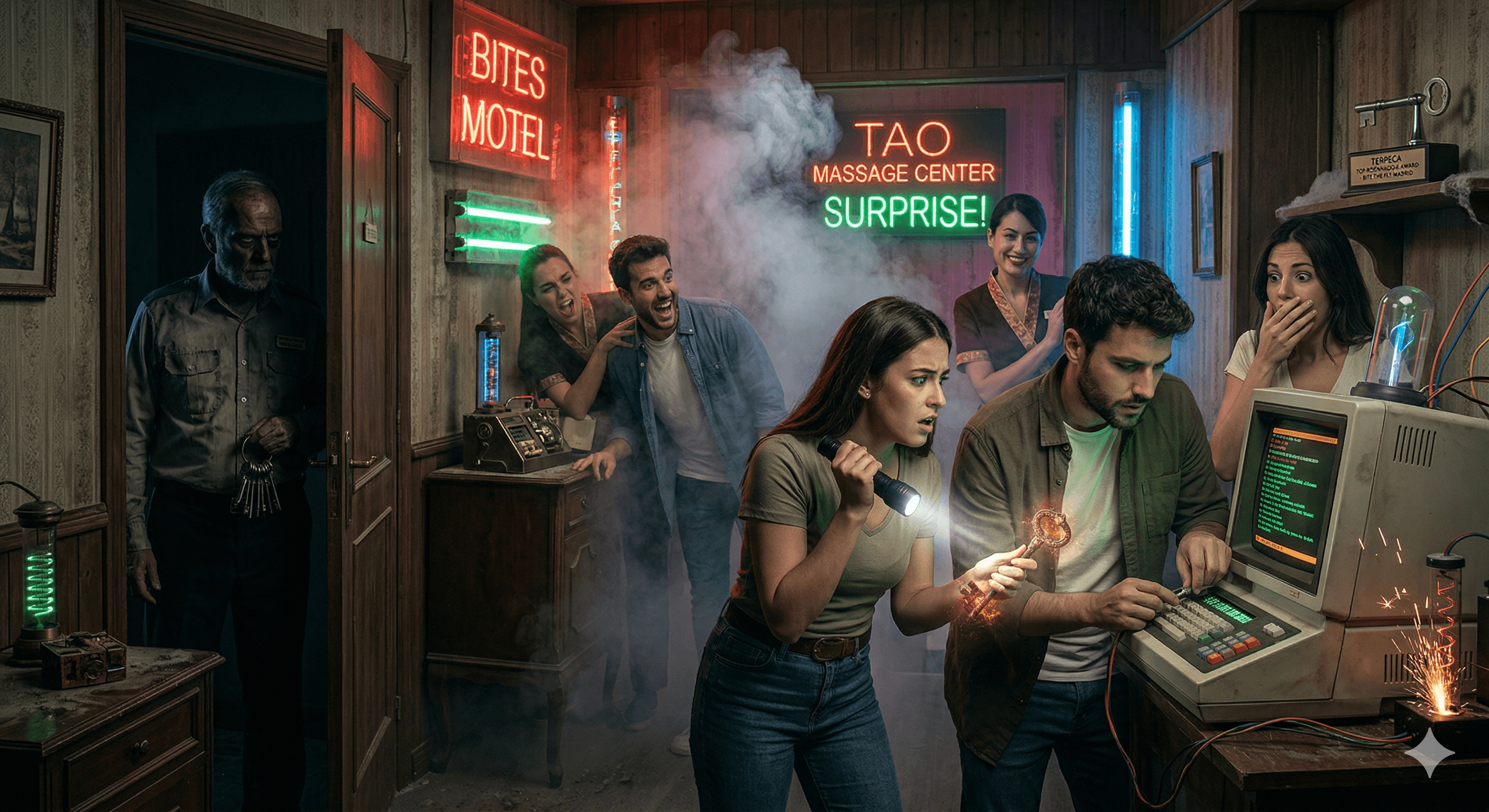
This is where the industry has made a huge leap in quality. Cinematic sets, immersive soundtracks, light and sound effects, technology integrated into the puzzles and, in many cases, live actors who interact with you throughout. You are not "solving a room" — you are living a story. A clear example are the Bite The Fly rooms in Madrid: Bites Motel, a 101-minute mystery experience that will give you goosebumps, and Tao Massage Center, where laughter and surprise take centre stage. Both awarded the international TERPECA prize by the world's most experienced players.
Horror escape rooms
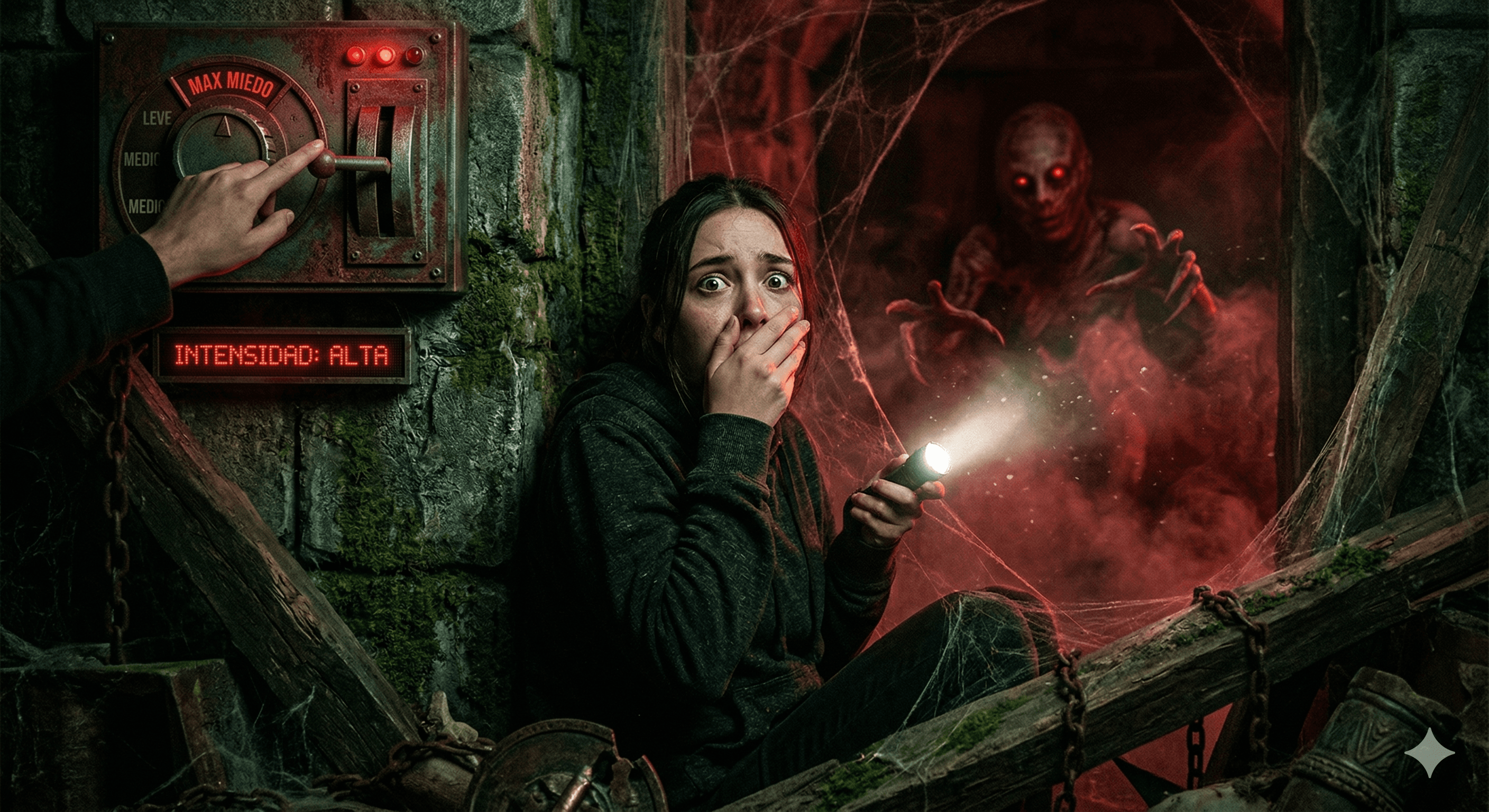
For the brave (or those who think they are brave until the lights go out). They incorporate fear elements: darkness, jump scares, chases and an atmosphere designed to make your heart race. Not for everyone, but if you love adrenaline, they are unforgettable. Important: many rooms offer intensity settings so you can choose how scared you want to be.
Large group games (beyond the escape room)
Technically not escape rooms, but born from the same world. Designed for groups of 10, 20 or 30 people to play together with competitive dynamics, mini-games, physical challenges and coordination tasks. Perfect for birthdays, stag/hen parties or team building when you are too many for a classic escape room.

Portable and outdoor escape rooms
The experience leaves the four walls. These can be urban scavenger hunts with escape room mechanics, game boxes sent to your home, or outdoor experiences. They have gained huge popularity since the pandemic and are a great option when you want something different without travelling to a venue.

What should I expect from my first escape room?
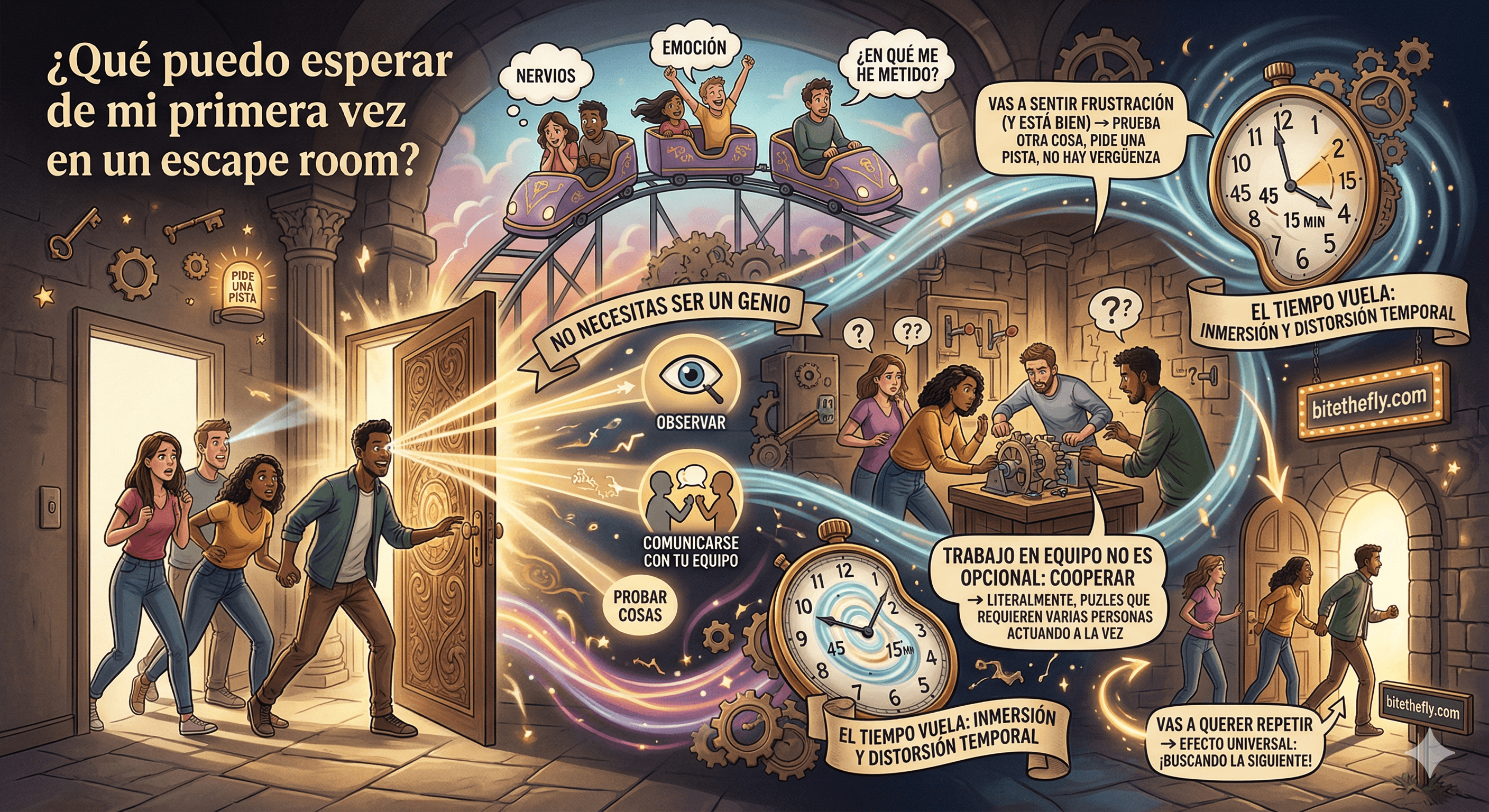
Your first escape room is like your first roller coaster: a mix of nerves, excitement and a bit of "what have I got myself into?". Here are some things nobody tells you that will help:
- You don't need to be a genius. Seriously. Escape rooms are designed for normal people without specialist knowledge. What you do need is to observe, communicate with your team and not be afraid to try things.
- You will feel frustrated (and that's okay). There will be moments when you have no idea what to do. That is part of the game. The key is not to freeze: if something doesn't work, try something else, look somewhere new, ask for a hint.
- Teamwork is not optional. You could be the smartest person in the room and still fail if you do not communicate with your group. There are literally puzzles that require several people to act simultaneously.
- Time flies. Before you know it, 45 minutes have passed and you swear it has only been 15. The immersion is real, and so is the time distortion.
- You will want to go back. This is the most universal effect. Whether you escape or not, when you come out you are already looking for the next room to play. You have been warned.
7 tips to get the most out of an escape room
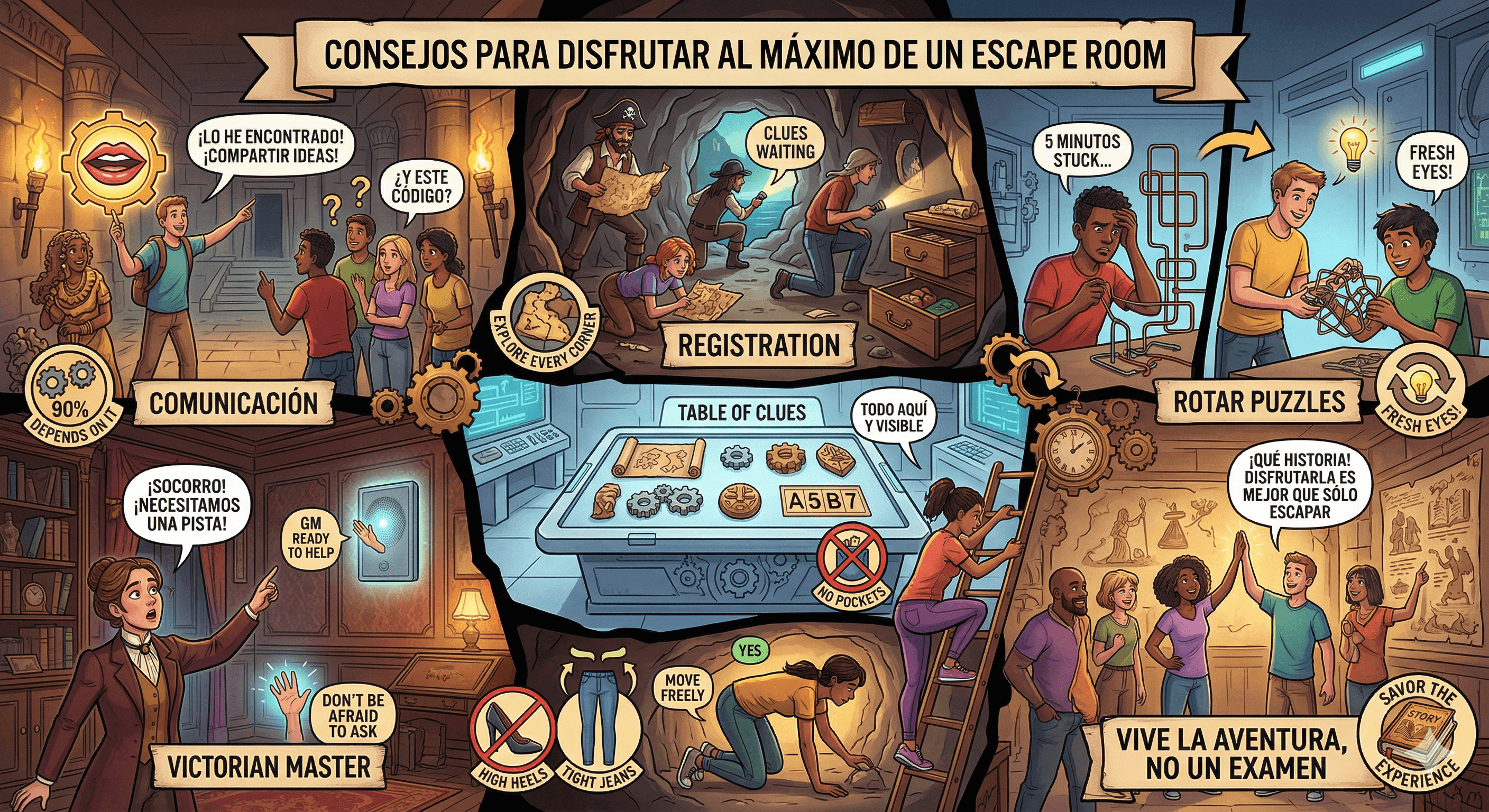
- Communication, communication, communication. If you find something, say it out loud. If you have an idea, share it. If you don't understand something, ask. 90% of teams that get stuck do so because of poor communication, not lack of intelligence.
- Search the entire space first. Before trying to solve anything, explore the room thoroughly. Open drawers, look under things, read everything written down. Many clues are just waiting for someone to bother looking.
- Don't hoard puzzles. If someone has spent five minutes on a puzzle without progress, rotate. Fresh eyes solve what stubbornness cannot.
- Organise your clues. When you find objects or codes, leave them somewhere visible to everyone. There is nothing worse than someone pocketing a key and forgetting they have it.
- Don't be afraid to ask for hints. The Game Master is there to help you, not judge you. If you have been stuck for more than 5 minutes, ask for help. Advancing with a hint is much better than staying blocked for half an hour.
- Wear comfortable clothes. Some escape rooms require crouching, climbing or moving through tight spaces. Heels and tight clothing are not your allies here.
- Enjoy the journey. Don't obsess over escaping. The best experiences are those savoured without rushing. A good escape room is a story worth living, not an exam to pass.
Who is an escape room for?
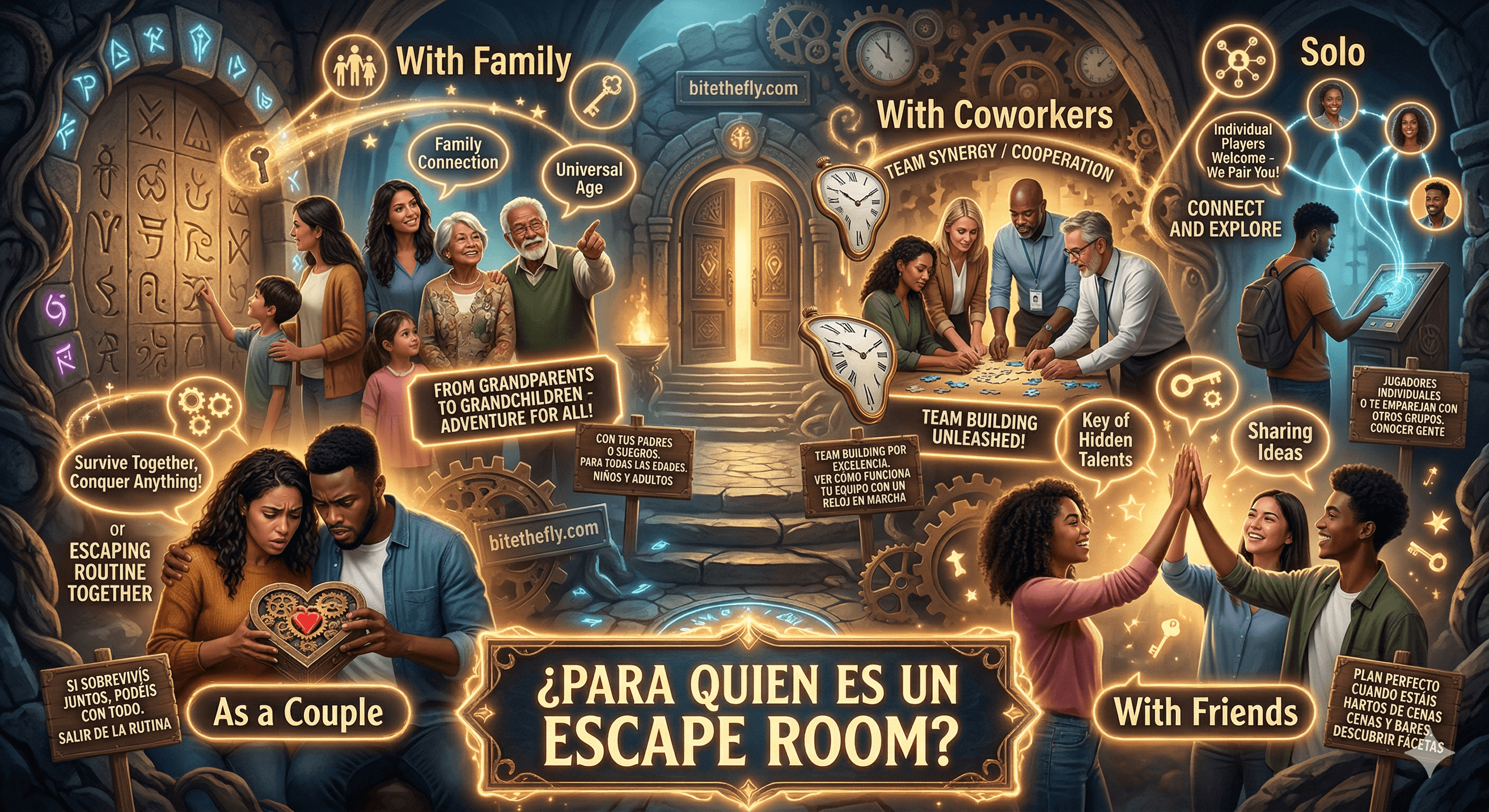
The short answer: everyone. The long answer: escape rooms are one of those rare activities that work for virtually any group and any occasion.
- With friends: the perfect plan when you are bored of dinners and bars. You will discover sides of your friends you never knew (some better than others).
- As a couple: if you survive an escape room together, you can handle anything. A brilliant way to break the routine and experience something different.
- With family: yes, even your parents or in-laws. Many rooms are suitable for all ages and are a plan that hooks children and adults alike.
- With work colleagues: the ultimate team building. There is no better way to see how your team works than locking them in a room with a running clock.
- Solo: some escape rooms allow individual players or pair you with other groups. A great way to meet people and experience the adventure even without a team.
Frequently Asked Questions about escape rooms
- Will I really get locked in?
No. Although the narrative says you are 'trapped', there is always an emergency exit and you can leave the experience at any time. Your safety is always the priority.
- Can I play if I have claustrophobia?
It depends on the room. Many are spacious open spaces where you won't feel uncomfortable. Check with the venue before booking and explain your situation — they will be happy to recommend the best option.
- Do I need to be physically fit?
Generally, no. The vast majority of escape rooms are accessible for any person. Some experiences may include more physical elements, but this is always stated beforehand.
- From what age can you play?
It varies by room. Many accept players from 8-10 years old accompanied by adults. Horror rooms usually have higher age restrictions. Always check before booking.
- How long does an escape room last?
Play time inside the room is usually 60 to 120 minutes. Including welcome and closing, plan between 90 minutes and two and a half hours total.
- How many people can play?
Normally between 2 and 6-8 people per room, although there are experiences designed for larger groups. Check each room's recommendation to get the most out of it.
- Can I repeat a room?
You can, but since you already know the solutions it loses much of its magic. What you can (and should) do is try different rooms. There are hundreds of themes waiting for you.
- How much does an escape room cost?
Prices vary by city, venue and number of players. In Madrid, the range is typically €15–€30 per person for standard rooms, and can reach €50 or more for premium high-immersion experiences.
Ready to give it a try?
If you have made it this far and still haven't tried an escape room, you have no more excuses. And if you are already an experienced player, we hope we have given you something new to think about, or at least made you smile.
At Bite The Fly we have spent years creating experiences that make people forget there is a world outside our rooms. If you are in Madrid and want to experience an escape room that leaves its mark, take a look at Bites Motel and Tao Massage Center. We cannot promise you will escape, but we can promise you will have an incredible time trying.